

PGST
Alarm · Camera · Sensor · Siren
ALARM SYSTEMS
CAMERAS
SENSORS & ACCESSORIES


SIRENS

By Thomas Rivière, Product Analyst — Last updated: 30 September 2026
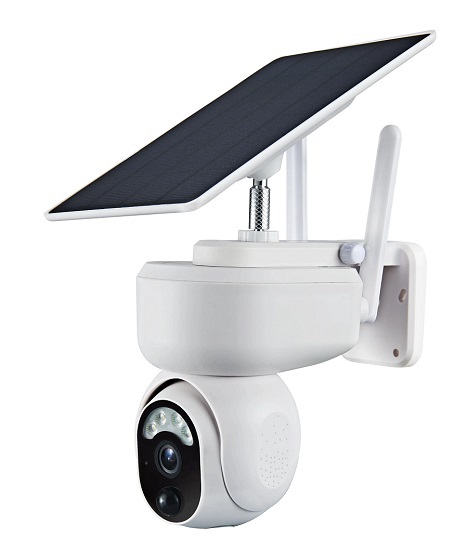
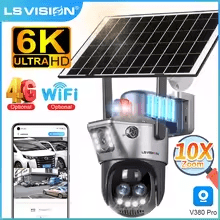
The PGST solar outdoor night camera combines infrared night vision and solar-powered autonomy for a fully wire-free exterior security solution, anywhere on your property.
PGST solar outdoor night camera: wire-free autonomy
The solar outdoor night camera from PGST is the ideal solution for locations where running a power cable is impractical: garden, remote gate, outbuilding, or parking area. Its integrated solar panel continuously charges the on-board battery, eliminating any need for mains cabling. The backup battery maintains operation during overcast periods and at night.
PGST solar outdoor night camera: features
Infrared night vision activates automatically at dusk for continuous outdoor monitoring without any external lighting. Motion detection sends instant push notifications to your smartphone via the PGST app. The camera connects to your home Wi-Fi and can be paired with a PGST alarm panel for centralised security management.
PGST solar outdoor night camera: installation
Fix the camera by screwing it to a wall or post at height, oriented towards your target monitoring zone. Position the solar panel to maximise direct sunlight exposure (south-facing in the northern hemisphere). Configure the Wi-Fi connection via the PGST app. No power cable to route — installation is straightforward.
5 key takeaways about the PGST solar outdoor night camera
- Solar autonomy: integrated panel + backup battery, no mains cable needed.
- IR night vision: clear images in complete darkness, auto-activation at dusk.
- Weather-resistant: built for outdoor conditions, rain, frost, and UV.
- Wi-Fi remote access: live feed from anywhere via the PGST app.
- Motion detection: instant push alert on smartphone.
FAQ — PGST solar outdoor night camera
Does the solar camera work at night and on cloudy days?
Yes. Solar energy collected during the day charges the backup battery, which powers the camera at night and during overcast periods. Autonomy depends on sunlight levels and recording frequency.
How should I orient the solar panel?
Point the panel south (northern hemisphere) at an angle that maximises direct sunlight exposure throughout the day. Avoid shade from trees, roof overhangs, or walls.
Can I supplement solar charging with a mains cable?
Some solar camera models include a backup charging port. Check your model’s specifications for this option.
Also in the PGST range
See also: PGST outdoor night camera · PGST outdoor siren · PGST PG103 alarm panel
PGST Solar Outdoor Camera: Cable-Free Energy Independence
The PGST solar outdoor night camera requires no mains power cable. Its integrated solar panel continuously charges the internal battery during daylight hours, giving it theoretically unlimited autonomy in regions with good sunlight levels. This makes it ideal for locations without convenient access to mains electricity: detached garages, garden sheds, barns, entrance gates or perimeter fencing. The camera is installed with only a single mechanical fixing — no cable routing through walls or underground conduits.
The built-in backup battery ensures continuous operation during overcast periods or at night. Even in cloudy conditions, the battery stores enough energy to maintain active surveillance. The solar model retains all the features of the wired outdoor camera: infrared night vision, motion detection with push notifications, live streaming via the PGST app and video recording.
Frequently Asked Questions — PGST Solar Camera
How many days does the battery last without sunlight?
Battery-only autonomy varies by model and camera activity level. Under standard surveillance conditions — moderate motion detections, no continuous recording — most PGST solar models provide 2 to 5 days of full operation with no solar input at all. In overcast but not rainy weather, even partial indirect sunlight partially recharges the battery and extends that duration significantly. In winter in low-sunlight regions, choose a location that maximises exposure to the limited available daylight.
Does the solar camera work reliably in winter?
Yes, the PGST solar camera works in winter, though charging performance is reduced due to shorter daylight hours. The built-in battery compensates for long nights and grey days typical of the cold season. Low temperatures do not affect the camera’s operation itself (outdoor IP certification applies year-round), but slightly reduce lithium battery capacity compared to performance at 20 °C. For very cold regions or northern climates, choose an installation spot that captures the maximum available winter sunlight.
Under standard use — moderate detections, no continuous recording — the battery alone covers 2 to 5 days with zero sunlight, which matters mainly for planning installation in low-light winter locations rather than as a general limitation.