

PGST
Alarm · Camera · Sensor · Siren
ALARM SYSTEMS
CAMERAS

SENSORS & ACCESSORIES


SIRENS

By Thomas Rivière, Product Analyst — Last updated: 7 November 2026
The PGST PG103 alarm panel is PGST’s entry-level wireless solution for protecting your home with wireless sensors, a siren and remote controls.
PGST PG103: overview of the alarm panel
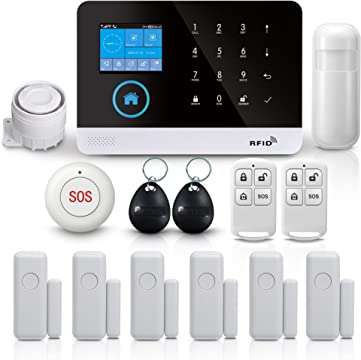
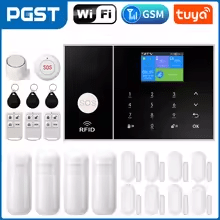
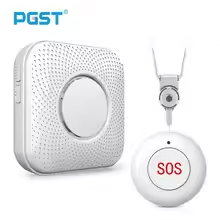
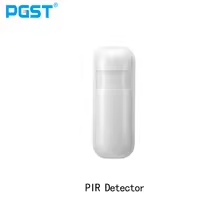
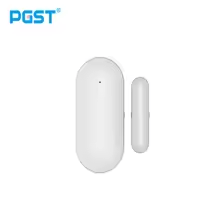
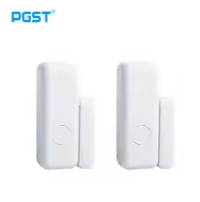
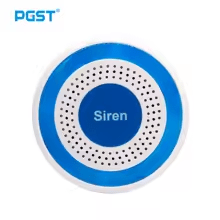
The PGST PG103 is a wireless alarm control unit designed for small to medium-sized homes. It controls PGST wireless accessories: remote controls, door sensors, infrared detectors, a wireless siren, RFID tags and an SOS button. Programming is done from the panel’s keypad or from the mobile app.
It is easy for anyone to set up: no wiring between devices, quick configuration and reliable wireless communication with paired accessories. When triggered, the panel can notify your emergency contacts by phone call or SMS.
PGST PG103: main features
The PG103 panel handles configurable detection zones, arming and disarming of the system (by code, remote control or app) and alert scenarios (siren, phone notification, SMS). It supports several modes: full arm, perimeter arm and disarm.
With an internal backup battery, it stays operational even during a power cut. The battery recharges automatically from the mains during normal operation.
PGST PG103: installation and configuration
Install the panel in a central location in your home to maximise wireless range to all devices. Connect it to the mains, pair each of your PGST accessories using the pairing procedure, and set up the alert numbers. The whole process is guided and requires no particular technical skills.
5 key points about the PGST PG103 alarm panel
- Wireless panel: controls PGST sensors, siren and remote controls without wiring.
- Alert notifications: phone calls and SMS to programmed contacts.
- Flexible arming: full, perimeter or disarmed to suit your situation.
- Backup battery: keeps working even during a mains power cut.
- Up to 100 accessories: remote controls, wireless detectors and RFID tags.
PGST PG103 manual in English: the essentials
Here are the basic settings of the PG103 panel, in the order of setup. The menu language can be changed in the system settings: the chosen language also applies to voice messages and alert SMS.
- Getting started: insert a micro-SIM card (a click confirms it is in place), plug in the 5 V USB adapter, then press the On/Off button: “Welcome” is displayed. To switch off, hold the button for 3 seconds.
- Alert numbers: Main menu → Phone → 1st phone. Enter the number (18 digits maximum), enable calls and/or SMS, then confirm: “Setting OK”. Up to 5 numbers.
- Remote control: Main menu → Parts → Add remote control. The panel displays “Synchronizing” for 20 seconds: press a button on the remote control until “Learning OK” appears.
- Wireless detector: Main menu → Parts → Add detector. Choose the zone name and its mode (part-armed, disarmed, 24 hours, closed or doorbell), then trigger the detector during the countdown.
- RFID tag: Main menu → Parts → RFID, then hold the tag near the bottom right-hand corner of the panel.
- App and Wi-Fi: the phone and the panel must be on the same Wi-Fi network. In the app, tap “Airlink”; on the panel, Main menu → WiFi → Airlink (60 seconds); enter the Wi-Fi password until “Airlink OK” appears.
Default codes: system password 6666, user password 1234 (4 digits, can be changed in the system settings). By SMS sent to the number of the panel’s SIM card: 1234#1 arms, 1234#2 disarms.
Reset: pressing the On/Off button five times in a row restarts the panel with factory settings and erases paired accessories. The SMS *6666*43* restores factory settings while keeping remote controls, detectors and tags.
FAQ — PGST PG103 alarm panel
Where can I find the PGST PG103 manual in English?
The essential steps are summarised above on this page: getting started, alert numbers, pairing remote controls, detectors and tags, and Wi-Fi connection. The panel’s menu language can also be changed in the system settings. Default codes: 6666 (system) and 1234 (user).
How many accessories can be connected to the PGST PG103 panel?
Up to 100 wireless accessories in total, including remote controls, detectors and RFID tags.
What is the difference between the PG103 and the PG106/PG107/PG108?
The PG106, PG107 and PG108 models generally offer more detection zones, more notification options and advanced features compared with the PG103. The PG103 is the entry-level model, ideal for small installations.
Does the PG103 panel work without an internet connection?
Yes, for the essentials: alert calls and SMS go through the GSM network of the SIM card inserted in the panel. App notifications and remote control, however, require a Wi-Fi connection.
Can the PG103 panel be managed from a smartphone?
Yes. Once connected to Wi-Fi (the “Airlink” function), the PG103 panel can be controlled from the mobile app: arming, disarming, adding remote controls and detectors, and receiving alerts.
More from the PGST range
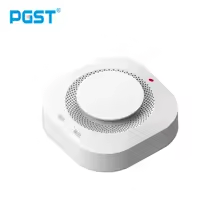
See also: PGST PG106 alarm panel · PGST door sensor · PGST infrared sensor · PGST indoor siren · PG107 · PG108
How does the PG103 send alerts?
The PG103 panel uses three complementary alert channels. It sends an SMS to and calls the registered numbers (up to 5, each with calls and SMS that can be enabled separately), and pushes the alert to the mobile app if it is connected to Wi-Fi.
Can I upgrade to a PG106, PG107 or PG108 panel later?
PGST panels use similar wireless accessories and a comparable pairing procedure: if you upgrade, check each accessory’s compatibility with the new panel before buying.
PGST PG103 panel: entry-level wireless protection
The PG103 is the entry-level model in the PGST range, designed to protect standard-sized flats and houses. It controls PGST wireless accessories: infrared detectors, door sensors, a wireless siren, remote controls and RFID tags. Accessories are paired from the panel’s “Parts” menu in around twenty seconds each.
When an alert occurs, the PG103 sends an SMS and calls the programmed emergency numbers. This notification goes through the GSM network of the SIM card, independently of the internet router. Its backup battery keeps protection running during a mains power cut, and the panel reports the outage.