

PGST
Alarm · Camera · Sensor · Siren
ALARM SYSTEMS
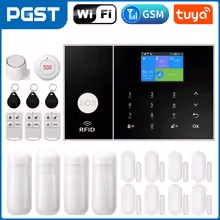
CAMERAS
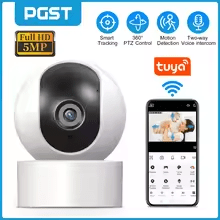
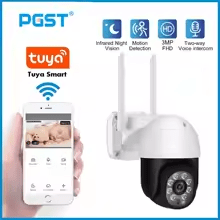
SENSORS & ACCESSORIES


SIRENS

By Thomas Rivière, Product Analyst — Last updated: 30 September 2026
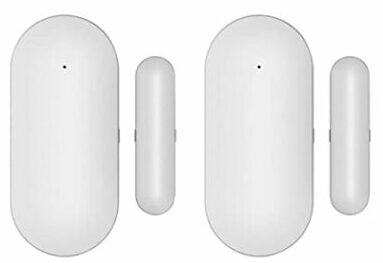
The PGST door sensor monitors every entry point in your home in real time and instantly alerts the alarm panel whenever a door or window is opened.
PGST door sensor: how it works
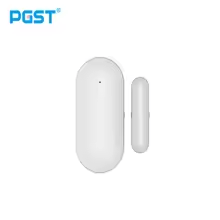
The PGST door sensor uses magnetic detection technology: when a door or window opens, the gap between the detector and the magnet breaks the magnetic field, triggering an immediate wireless signal to the PGST alarm panel. The panel then activates the siren and sends notifications to programmed emergency contacts.
At each arming cycle, the panel automatically checks all connected door sensors. If any entry point is open when you arm the system, you are notified before the arming process completes.
PGST door sensor: features and specifications
Wireless and battery-powered with ultra-low consumption, the PGST door sensor requires no wiring. It is compatible with all PGST alarm panels (PG103, PG106, PG107, PG108) and works on all types of openings: doors, windows, sliding panels, and glass doors. Available in white for a discreet integration into any interior.
The sensor reports its battery level to the alarm panel, so you are always notified in advance when a battery replacement is needed.
PGST door sensor: installation
Mount the detection body on the fixed frame and the magnet on the moving part (door or window leaf). The sensor can be installed vertically or horizontally. Screw mounting is recommended for durability, though strong double-sided tape can also be used. Always perform a range test before finalising the installation to ensure reliable signal reception by the alarm panel.
5 key takeaways about the PGST door sensor
- Instant detection: any opening triggers an immediate alert to the PGST panel.
- Wireless: no wiring required, easy installation on any door or window.
- Long battery life: ultra-low power consumption with battery level reporting to the panel.
- Pet-friendly: unlike PIR sensors, it does not generate false alarms from pet movement.
- Full PGST compatibility: works with all panels in the PGST range.
FAQ — PGST door sensor
Is the PGST door sensor compatible with all PGST alarm panels?
Yes. The PGST door sensor is compatible with all panels in the PGST range: PG103, PG106, PG107, and PG108. Pairing is done during the initial setup of the alarm system.
How do I know when to replace the battery?
The PGST door sensor transmits its battery level to the panel. When the level becomes critical, an alert notifies you that a replacement is needed, ensuring continuous monitoring without interruption.
Can the door sensor work without an alarm panel?
No. The PGST door sensor must be paired with a PGST alarm panel to function. The panel processes the signal and triggers the siren and notifications. The sensor alone has no standalone alert function.
Also in the PGST range
See also: PGST infrared sensor · PGST PG103 alarm panel · PGST indoor siren · PGST indoor camera
PGST Door Sensor: Magnetic Detection for All Opening Types
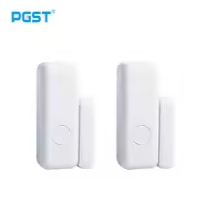
The PGST door sensor uses a simple and reliable magnetic detection principle: two elements — a detector and a magnet — are fixed respectively to the fixed frame and the moving part of a door or window. When the opening is moved, the break in the magnetic field between the two elements instantly triggers an alert, transmitted wirelessly to the PGST panel via 433 MHz. This transmission is immediate with no perceptible delay.
Discreet (white finish, compact format) and requiring no cabling, it installs in minutes on any door or window: hinged, sliding, casement or patio door. The absence of cables and the option of screw or double-sided adhesive fixing make it easy to reposition if the room layout changes.
Frequently Asked Questions — PGST Door Sensor
Does the sensor work on sliding windows?
Yes. The PGST door sensor is compatible with all opening types — hinged, sliding, pivot or sash windows. For sliding windows, the detector is fixed to the fixed frame and the magnet to the sliding panel, aligned so they face each other when the window is closed. The maximum gap between the two elements when closed must remain under 10–15 mm for reliable detection. For patio doors with multiple sliding panels, one sensor per panel is recommended.
What is the maximum gap between the sensor and the magnet?
The maximum distance between the detector and the magnet when the opening is closed is generally 10–15 mm depending on the model. Beyond this distance, the magnetic field between the two elements is too weak to maintain the logical “closed” state, which may result in false alarms or missed detections when the opening moves. If your door frame is thick or an insulation seal creates a gap larger than this, use the spacing shim supplied with some models to bring the two elements closer together.
How long does the door sensor battery last?
Battery life for the PGST door sensor ranges from 18 to 36 months depending on how frequently the monitored opening is used. Front doors opened and closed dozens of times daily will consume the battery faster than a rarely opened window. The PGST panel monitors the charge level continuously and sends a notification well before the battery is exhausted, allowing you to replace it without any interruption to surveillance. Replacement is straightforward and requires no reconfiguration of the sensor.
Detection relies on keeping the gap between sensor and magnet under 10-15mm when closed — a thick door frame or an insulation seal can widen that gap enough to cause false alarms or missed openings, so the supplied spacing shim is worth using rather than skipping.