

PGST
Alarm · Camera · Sensor · Siren
ALARM SYSTEMS

CAMERAS

SENSORS & ACCESSORIES




SIRENS

By Thomas Rivière, Product Analyst — Last updated: 30 September 2026
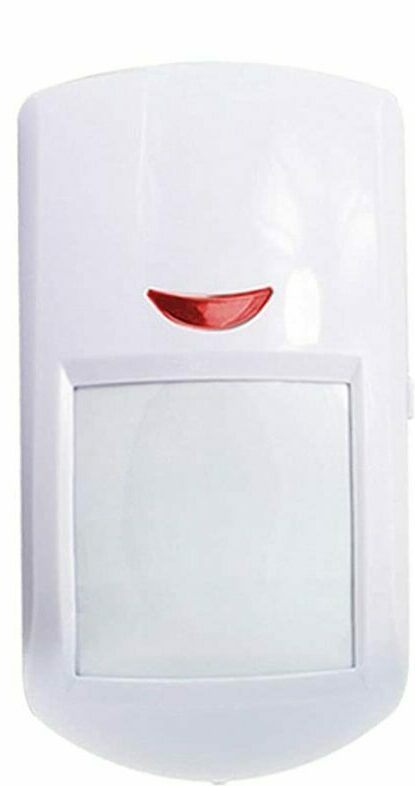
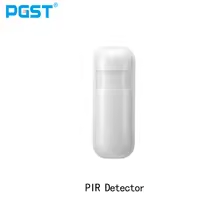
The PGST infrared sensor detects any movement inside your rooms and instantly alerts the alarm panel for a proactive, responsive home security system.
PGST infrared sensor: passive infrared detection
The PGST PIR (Passive Infrared) sensor detects heat variations emitted by moving bodies within its detection zone. When a presence is identified, a wireless signal is immediately sent to the PGST alarm panel, which activates the siren and sends notifications to programmed emergency contacts.
Passive infrared technology ensures high reliability with minimal false alarms caused by light changes or air currents. For optimal coverage, install the sensor in a corner at height, angled to cover the main traffic areas of the room.
PGST infrared sensor: installation
Mount the PIR sensor in a corner of the room at a height of approximately 1.8 to 2.4 m, oriented towards the main access areas (doorways, corridors, stairs). Avoid pointing it towards direct heat sources such as radiators or sun-exposed windows, which could generate false alerts.
Wireless and battery-powered, installation requires no wiring. Perform a range test before finalising the position to ensure reliable signal reception by the PGST panel.
PGST infrared sensor: pet immunity
If you have pets, some PGST PIR models are available in a Pet Immune version that ignores the heat signature of small animals while still detecting human-sized movement. This prevents false alarms from cats or small dogs moving around the house at night.
5 key takeaways about the PGST infrared sensor
- Passive infrared detection: detects heat variations from human movement, reliable and accurate.
- Wireless: radio communication with the PGST panel, no wiring needed.
- Low false alarm rate: PIR technology unaffected by light changes or air currents.
- Pet Immune option: available in a version that ignores small pets.
- Long battery life: ultra-low standby consumption with level reporting to the panel.
FAQ — PGST infrared sensor
Does the PGST PIR sensor work in the dark?
Yes. The PIR sensor detects infrared heat, not visible light. It is equally effective in complete darkness and in daylight, with no need for additional lighting.
How many infrared sensors can I connect to a PGST panel?
The number of sensors you can connect depends on your PGST panel model (PG103, PG106, PG107, or PG108). Refer to your panel’s specifications for the maximum number of supported zones.
What is the difference between a standard PIR and a Pet Immune PIR?
A standard PIR detects any movement producing a human-sized heat signature. A Pet Immune PIR is calibrated to ignore heat sources from small animals, significantly reducing false alarms in homes with pets.
Can I use the PIR sensor outdoors?
The PGST PIR sensor is designed for indoor use. For outdoor detection, use a compatible outdoor camera with motion detection from the PGST range.
Also in the PGST range
See also: PGST door sensor · PGST PG103 alarm panel · PGST indoor camera · PGST indoor siren
PGST Infrared Sensor: PIR Technology and Reliable Motion Detection
The PGST motion sensor uses Passive Infrared (PIR) technology to detect heat variations emitted by moving bodies within its field of view. Unlike microwave or ultrasonic sensors, PIR only detects moving heat sources — dramatically reducing false alarms caused by light changes, draughts or insects. Communication with the PGST panel is entirely wireless via 433 MHz, and the sensor runs on a battery that requires no mains connection.
Mounted at height in a room corner, the sensor covers a wide detection zone from an optimal vantage point. The PGST panel continuously monitors the battery charge level and alerts you before any potential failure, ensuring uninterrupted protection without unexpected gaps in coverage.
Frequently Asked Questions — PGST Motion Sensor
Will pets trigger false alarms?
The standard PGST PIR sensor detects any moving heat source, including pets. For households with cats or dogs, PGST offers a pet-immune version configured to ignore low-mass heat sources — typically animals under 25 kg. This technology analyses the thermal signature of detected movement and distinguishes a pet from a human silhouette. For large dogs above 25 kg, check the exact specification of your model and consider a higher mounting position (2.2 m or above) to reduce the detection angle at floor level.
What is the detection range and angle?
The PGST motion sensor typically offers a horizontal detection angle of 110–120 degrees and a range of 8–12 metres depending on the model. This wide angle allows coverage of an entire standard room or corridor from a single corner position. Effective range can vary with ambient temperature — PIR is more sensitive when the difference between body temperature and room temperature is greater — and with any obstacles in the sensor’s field of view.
At what height should the motion sensor be installed?
The recommended installation height is between 1.8 m and 2.4 m above the floor. Below 1.8 m, the sensor may be obstructed by furniture and its ability to ignore small animals is reduced. Above 2.4 m, the detection angle becomes too steep and zones close to the far wall can fall outside the coverage area. Position the sensor in the corner formed by two walls of the room, angled toward the main traffic area — typically facing the entrance door or main circulation corridor.
The Pet Immune variant filters heat signatures under roughly 25kg, but larger dogs can still trigger it — for bigger breeds, mounting the sensor higher (2.2m or more) narrows the detection angle at floor level enough to reduce false alarms without losing coverage of the main traffic zone.